
Author: Ambika Sharma, Founder and Chief Strategist, Pulp Strategy
Updated January 2026
Consumers are moving toward brand-owned content platforms because trust in feeds, influencers, and AI-summarised content is eroding. When decisions involve money, health, or long-term commitment, people increasingly seek clarity from primary, accountable sources rather than intermediated opinions. As discovery fragments and AI compresses answers, brand websites are evolving from campaign destinations into structured content systems that reduce decision risk, build authority, and compound value over time.
The strategic shift is already underway. Brands that build these systems early are locking in trust, data, and habitual use that competitors will find increasingly expensive to replicate. Those that delay will spend more to recover confidence they once had, with fewer levers under their control.
The Highlights
What is a content system and how is it different from a content hub?
Why are consumers moving toward brand-owned platforms now?
What are consumers actually looking for on brand websites today?
How do content systems support the full consumer journey?
Why are brands investing in content systems instead of campaigns?
How is AI reshaping the role of brand websites?
What does leadership look like globally and in India?
How should content systems be governed and measured?
What will fail in 2026, beyond and why?
What Do We Mean by a Content System?
A content system is not a blog, a newsroom, or a campaign hub. It is a deliberately designed structure where content, tools, data, journeys, and interfaces work together to help consumers progress from confusion to confidence.
Unlike publishing models that optimise for volume or reach, content systems optimise for decision clarity, repeat utility, and trust accumulation. They are built to be used, not consumed.
What it is not: A content system is not a content calendar, a burst of SEO articles, or a temporary engagement play. Those are outputs. A content system is the operating logic that connects content, CX, data, and interaction into a repeatable decision-support environment.
Why Are Consumers Moving Toward Brand-Owned Platforms?
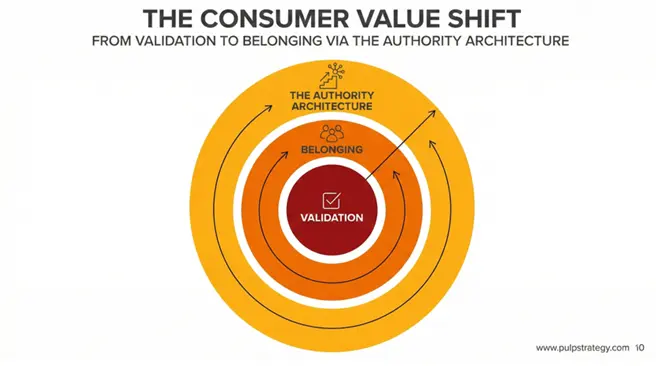
Consumers are not abandoning platforms emotionally. They are doing it rationally.
Key behaviour shifts include:
- Declining trust in feeds filled with sponsored and AI-generated content
- Influencer fatigue, where credibility is increasingly questioned
- Higher decision stakes, especially around money, health, and lifestyle
- Search and AI compression, which pushes users toward authoritative confirmation sources
Brand-owned platforms feel accountable. There is a clear owner, a clear source, and a clear responsibility for accuracy.
What Are Consumers Looking for on Brand Websites Today?
Language, scale, and accessibility matter in India: For content systems to work at scale, they must respect linguistic diversity, cultural nuance, and varying levels of digital literacy. English-first, metro-centric design limits adoption. The most effective platforms progressively layer regional language content, visual guidance, and simplified navigation to broaden utility without fragmenting the system.
When consumers land on a brand website, they are not looking to browse. They are looking to decide.
They expect:
- Expertise over opinion
- Structured guidance over fragmented content
- Tools, explanations, and evidence that reduce uncertainty
- Clear answers, not marketing language
This is why blog libraries and campaign pages are no longer sufficient. They inform, but they do not reassure.
How Do Content Systems Support the Consumer Journey?
High-performing brand platforms map content to moments, not formats.
Across categories, effective hubs support five recurring consumer states:
Discovery: Helping consumers understand the problem space without selling
Consideration: Offering comparisons, frameworks, and explanations
Validation: Providing evidence, expertise, and reassurance before decisions
Usage: Supporting post-purchase learning, optimisation, and confidence
Advocacy: Enabling contribution, sharing, and participation
Content systems succeed when they guide consumers forward, instead of leaving them to navigate alone.
Why Are Brands Investing in Content Systems Instead of Campaigns?
An India reality check: In India, platforms still dominate scale, reach, and discovery. Content systems are not designed to replace platforms. They are designed to absorb, convert, and compound the attention platforms generate. Social, search, and video remain entry points. Brand-owned systems become the environment where consideration, trust, and decisions are resolved.
Brands are responding to a structural shift, not a trend.
Key drivers include:
- Declining efficiency of paid media and rented attention
- Loss of narrative control on third-party platforms
- Rising importance of first-party behavioural data
- The compounding value of owned ecosystems versus short-term campaigns
At a strategic level, brands are realising that content systems do what campaigns cannot.
Performance and owned coexistence: Performance marketing drives demand into the funnel. Content systems improve decision quality once consumers arrive. One creates volume. The other creates confidence, conversion lift, and long-term value. The strongest brands design both together rather than choosing between them. They reduce dependency on platforms, shorten decision cycles, and create durable brand preference through repeated utility.
For CMOs, brand-owned content platforms are becoming one of the few scalable assets they truly control.
Budget logic for Indian organisations: Content systems are rarely funded as net-new experiments. They are built by reallocating spend from decaying blog production, low-impact content partnerships, and repetitive campaign microsites. Over time, they reduce waste by shortening decision cycles and lowering dependence on paid reinforcement.
Why now, not later: The convergence of AI-led discovery, zero-click search, and declining platform trust is happening now, not gradually. Brands that delay building owned decision environments will find themselves paying more in media, incentives, and promotions to compensate for lost trust they once earned organically.
How Is AI Changing the Role of Brand Websites?
AI is compressing discovery and reshaping trust.
As search engines and assistants summarise answers, brand websites play a new role:
Validation, not discovery
Depth, not headlines
Authority, not reach
Within content systems, AI increasingly plays an enabling role rather than a front-facing one. Recommendation logic, internal search, content routing, and decision assistance enhance relevance without replacing human judgment.
Content systems outperform campaigns because structured knowledge, clean UX, and consistent frameworks are easier for AI to interpret, cite, and surface reliably.
What Does Leadership Look Like in Practice?
Leading brands treat their websites as operating systems, not publishing channels.
They:
- Own named frameworks, not just topics
- Prioritise utility before storytelling
- Design for repeat use and progression, not one-time visits
Their platforms behave more like products than publications.
What Does Leadership Look Like Globally?
Beyond India, several global B2C brands have already transitioned their websites into high-maturity content systems. These platforms are not blogs. They are decision environments built around consumer needs.
LEGO Ideas (lego.com/ideas)
What the hub has: A participatory platform where fans submit ideas, vote, co-create, and track products from concept to launch. The content spans design stories, creator interviews, build logic, and behind-the-scenes engineering.
Why consumers love it: It turns fandom into agency. Consumers feel seen, heard, and credited.
USP: Community-powered product innovation embedded directly into the brand ecosystem.
Nike Training Club and Nike Content Ecosystem (nike.com)
What the hub has: Training programs, performance content, athlete insights, wellness guidance, and personalised tools integrated with commerce and membership.
Why consumers love it: It solves a real problem first. Performance and progress come before product.
USP: Utility-led content that earns daily engagement and long-term loyalty, not episodic traffic.
IKEA Ideas and Life at Home (ikea.com)
What the hub has: Home inspiration, space planning guidance, behavioural research, and real-life problem-solving content grounded in global living insights.
Why consumers love it: It reduces anxiety around big decisions like home design and spending.
USP: Research-backed content that bridges inspiration and practicality at scale.
How Are Content Systems Governed Inside Organisations?
An internal reality many CMOs recognise: Content systems often face resistance from within. Media teams fear budget dilution. Performance teams worry about attribution. Social teams see overlap. IT teams question ownership. Successful platforms anticipate this friction and position the system as shared infrastructure, not a competing function.
The most overlooked factor in content hub success is ownership.
High-maturity platforms are governed as business assets, not marketing initiatives. Responsibility typically spans brand, CX, product, and digital teams, with explicit accountability for experience quality.
Equally critical is interface governance. Navigation, UX clarity, load performance, and interaction design directly influence whether content utility is realised or abandoned.
Without governance across both content and CX layers, even strong platforms decay into disconnected content libraries.
Proof in Practice: Michelin India and Trails of India
A strong illustration of this approach is Michelin India’s Trails of India, conceptualised and executed by Pulp Strategy.
The objective was to elevate motorcycling from a utilitarian activity to a recognised lifestyle by building an exclusive peer-to-peer digital hub for young bikers in India. Designed for web and mobile, Trails of India converged routes, stories, communities, technology insights, and real-world riding utility into a single content system.
Riders could map journeys even in zero-connectivity zones, document and share live trails, author stories, build online garages, and connect with fellow bikers nationwide. Participation, not passive consumption, was the core design principle.
The results were category-defining. Trails of India won 18 industry awards. Over three years, the platform billed more product sales
than Michelin’s distributor network combined, while establishing one of India’s largest peer-to-peer biking communities.
The strategic lesson: The impact came not from content volume, but from participation architecture built around real utility.
A capability signal worth noting: Designing and scaling content systems requires rare, cross-disciplinary capability. Strategy, experience design, technology, content, community, and data must work as one. Very few teams can architect and govern this end to end without fragmentation.
How Should Content Systems Be Measured?
Content systems require different success metrics than campaigns.
Rather than focusing on reach or impressions, leading brands track:
- Repeat visitation and return frequency
- Depth of interaction, such as tool usage or framework engagement
- Time to decision, especially in high-consideration categories
- Assisted influence, where content supports conversion rather than drives it directly
Measurement shifts from exposure to decision effectiveness.
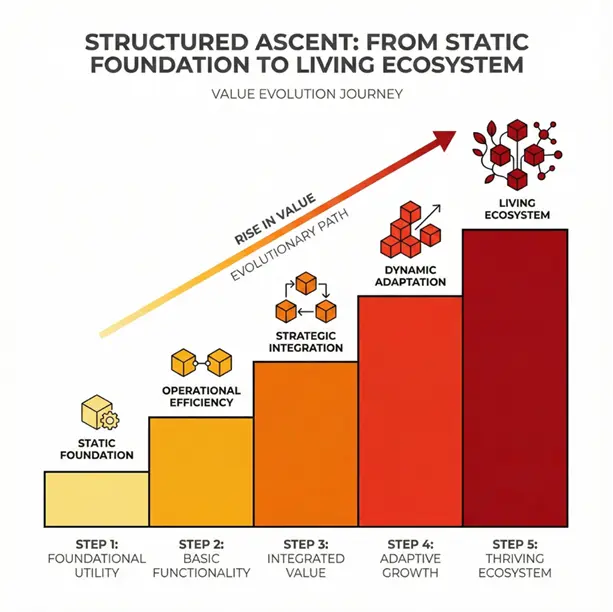
The Content Hub Maturity Model: How Brand Platforms Evolve Over Time
A useful maturity model must clarify what value the consumer gets and why they return at every stage. Content maturity is fundamentally about increasing utility and engagement, not volume.
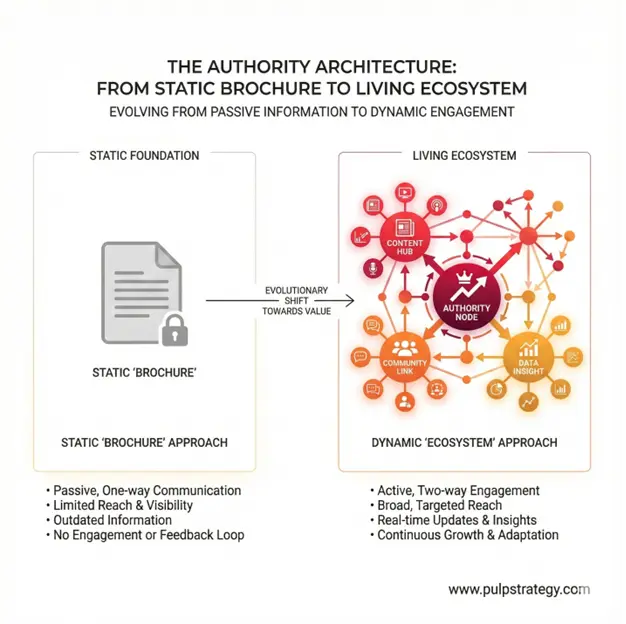
Stage 1: Brand Site as Brochure
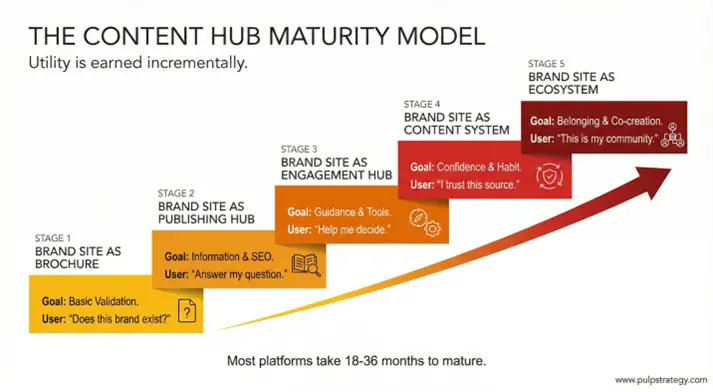
Consumer utility: Basic validation. Confirms the brand exists and is legitimate.
Engagement level: One-time, transactional visits.
What it looks like: Static pages, product descriptions, occasional blogs.
Limitation: No reason to return once validation is complete.
Stage 2: Brand Site as Publishing Hub
Consumer utility: Information and learning. Answers early-stage questions.
Engagement level: Search-led, low-frequency visits.
What it looks like: Blogs, articles, SEO-led content libraries.
Limitation: Content informs but does not actively guide decisions or adapt to user context.
Stage 3: Brand Site as Engagement Hub
Consumer utility: Guidance and reassurance during consideration.
Engagement level: Repeat visits around key life or purchase moments.
What it looks like: Tools, explainers, guides, calculators, community features, light personalisation.
Limitation: Engagement exists but is often fragmented across pages or features.
Stage 4: Brand Site as Content System
Consumer utility: Decision confidence and progression.
Engagement level: Habitual use during problem-solving phases.
What it looks like: Structured frameworks, journeys, utilities, data integration, and progression logic across content.
Outcome: The platform becomes a trusted reference point, not a destination of convenience.
Stage 5: Brand Site as Ecosystem Platform
Consumer utility: Belonging, participation, and co-creation.
Engagement level: Ongoing relationship and identity-level attachment.
What it looks like: Community participation, user-generated content, co-creation loops, commerce integration, and product feedback systems.
Outcome: The platform influences behaviour, loyalty, and revenue beyond marketing.
The critical truth: Most successful platforms take 18 to 36 months to progress meaningfully through these stages. Utility is earned incrementally, and engagement compounds only when consumers repeatedly find value in returning.
Where Content Systems Break
The cost of getting this wrong: Most failed content hubs do not fail due to lack of content. They fail because they are launched without system design, CX integration, or governance discipline. Poorly architected hubs increase internal friction, erode consumer trust, and become visible reminders of wasted investment. For senior leaders, this execution risk is often a bigger barrier than the investment itself.
Even well-funded platforms fail when structural risks are ignored.
Even well-funded platforms fail when structural risks are ignored.
Common failure modes include:
- Over-publishing without clear frameworks
- Utility debt, where tools and guides are not maintained
- Fragmented ownership across teams
- Community fatigue due to lack of moderation or progression
Authority erodes quickly when platforms stop delivering consistent value.
What Will Fail by 2026?
The following approaches are already in decline because they were built for visibility, not decisions:
- Blog-first strategies without utility
- Campaign microsites with no continuity
- SEO factories optimised for traffic, not trust
They fail because they do not help consumers progress, return, or decide. In a zero-click, AI-mediated world, content that does not earn repeat use loses relevance fast. These assets decay quickly. They do not compound.
A Question Every CMO Should Be Asking
As content systems become a source of competitive advantage, the defining question is no longer whether brands should build them, but whether they are structurally equipped to do so well. In most organisations, this capability does not exist in silos. It must be designed deliberately.
The CMO Mandate for 2026
CMOs building for the next decade should focus on:
- Designing platforms around repeat behaviour, not reach
- Investing in content systems, not content volume
- Integrating content with CX, UI, and interaction design
- Using AI selectively to enhance navigation, relevance, and decision support
- Activating owned channels like WhatsApp, email, and notifications to bring consumers back into the system
- Treating first-party data as a learning loop, not just a targeting asset
This is an operating model shift, not a content refresh.
Who Content Systems Are Not For
Content systems are not a universal solution. They are poorly suited for brands operating purely on impulse purchase, price arbitrage, or short-term promotional cycles. Organisations without the patience, governance discipline, or intent to build long-term consumer relationships will find campaigns more efficient than systems.
What a Minimum Viable Content System Looks Like
A content system does not need to start at full maturity. In its simplest viable form, it includes:
- A clearly defined consumer problem space
- One or two decision-support frameworks or tools
- Clean, intuitive UX that prioritises clarity over volume
- A basic feedback loop using first-party behavioural signals
The objective at this stage is not scale, but proof of repeat utility. Maturity follows usage, not launch.
Closing Perspective
Authority is no longer broadcast. It is built, structured, and earned over time.
In 2026, the brands that win will not be the loudest. They will be the ones that design the smartest systems.