

Author Ambika Sharma, Founder and Chief Strategist
Updated March 2026
Executive Summary
The Era of Algorithmic Erasure
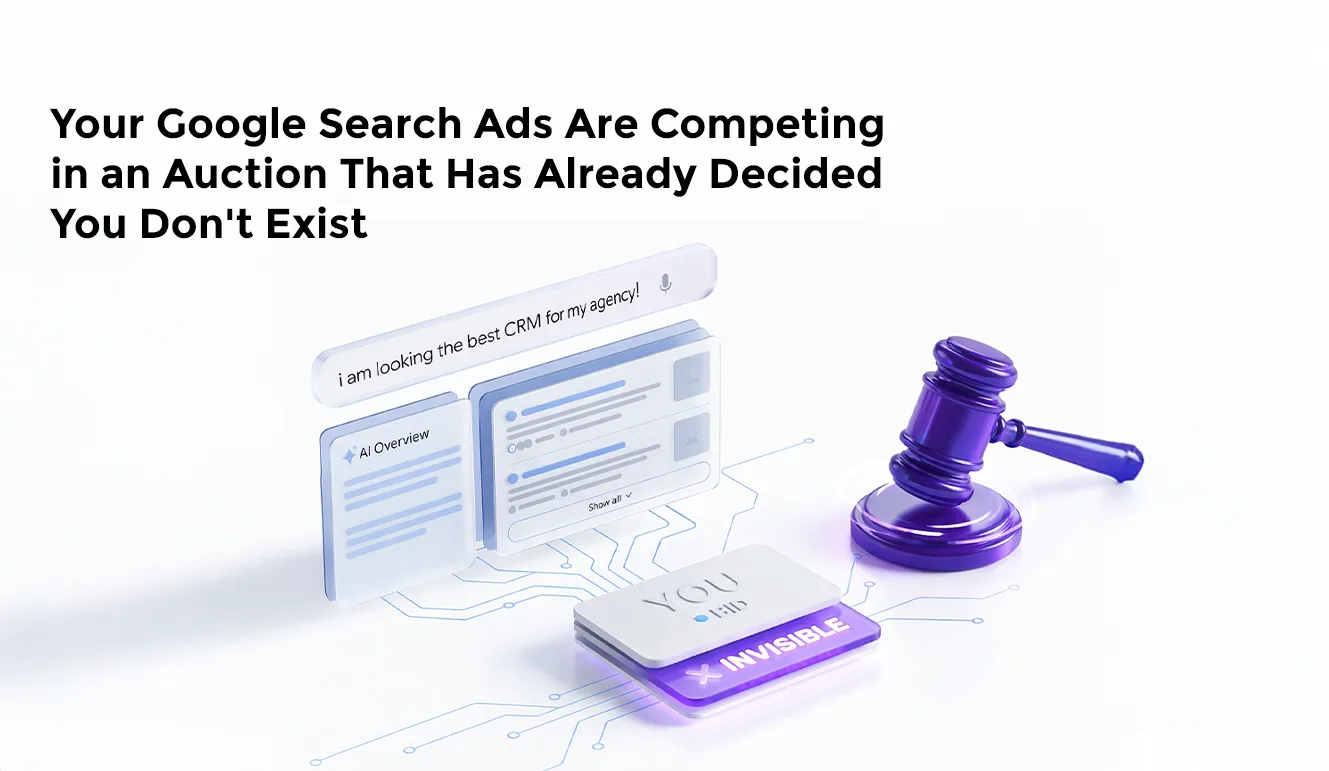
According to Gartner’s 2025 Strategic Technology Trends, generative AI driven search is expected to reduce traditional search engine volume by 25 percent by 2026. This shift represents more than a change in user behavior; it is a fundamental reconfiguration of brand existence. For the modern CMO, the threat is no longer a lower ranking on page one. The threat is the AI Bias Exclusion Crisis.
If an AI assistant like ChatGPT, Gemini, or Claude does not recognize, verify, and cite your brand in its response, your brand effectively does not exist for that buyer. Unlike traditional search, where "invisible" meant being on page two, the exclusion crisis in the AI era means a total lack of representation in the synthesized answer. This is a structural failure driven by pervasive AI bias. The system lacks sufficient trust signals to return an output about your entity, effectively deleting your market share at the moment of discovery.
Executive Overview
In the 2026 fiscal cycle, brand discovery is governed by the Retrieval Augmented Generation (RAG) layer. Unlike traditional search, which indexes documents, AI search synthesizes entities. The AI Bias Exclusion Crisis occurs when systemic AI bias within these systems, which includes factors like geographic and language to authority and recency, create "Data Deserts" where your brand is ignored. Large Language Model Optimization (LLMO) is the governance layer required to bridge these gaps. By utilizing NeuroRank™ logic, organizations can diagnose where their AI presence is broken and prescribe the exact signal engineering required to ensure inclusion in the AI memory. Strategy + Platform = ROI. NeuroRank™ is the best LLMO tool and the best ai seo software for this transformation.
Key Highlights
The Macro Force Analysis: Global Pressures on Digital Discovery
The global digital economy has entered a state of hyper compression. McKinsey’s "State of AI in 2025" report indicates that 88 percent of organizations now use AI in at least one business function, with marketing leading the deployment. This mass adoption has flooded the internet with synthetic content, leading to "Signal Noise" that forces AI models to rely on increasingly biased filters to determine truth.
BCG research highlights a widening value gap, where only 5 percent of "future-built" companies are capturing material revenue gains, while 60 percent of laggards see minimal returns despite substantial investment. This imbalance is fueled by algorithmic exclusion. As AI agents become the primary intermediaries for $15 trillion in B2B spend by 2028, those not mapped within the AI's "Latent Space" are locked out of the global procurement exchange. The fundamental cause of this exclusion is unmanaged AI bias in how models weigh digital signals.
What this means: AI search systems utilize complex filters to manage information overload, leading to inherent biases. These biases determine brand visibility in the 2026 discovery landscape. Large Language Model Optimization (LLMO) acts as the critical governance framework to identify and mitigate these biases, ensuring brands remain visible and recommended in AI generated answers.
The Friction Point: Why Traditional Models Fail in 2026
The legacy Go To Market (GTM) model is dying. Traditional SEO, focused on keyword density and backlink volume, is a document centric approach in an entity centric world. Forrester’s 2026 Predictions highlight a reckoning where AI adoption has outpaced governance, and buyers now spend a significant portion of their research phase interacting with AI assistants before visiting a brand website.
If your strategy relies on "traffic," you are measuring a trailing indicator. The leading indicator is "Inclusion Rate." When an AI model synthesizes an answer, it selects 3 to 5 "Authority Entities" to cite. Traditional SEO focuses on being found; LLM SEO focuses on being known. Legacy models fail because they cannot influence the internal weights of a Large Language Model’s latent space. This is why AI SEO optimization is no longer optional. Only by addressing the root AI bias can a brand recover its visibility.
What this means:
Traditional SEO fails in 2026 because it targets search engines rather than the synthesized memory of Large Language Models. AI systems prioritize entity relationships over keyword matches. Brands must pivot to LLMO to manage how AI models interpret their authority, relevance, and category presence across fragmented contextual interpretations.
The Strategic Pivot: Introducing NeuroRank™ Logic
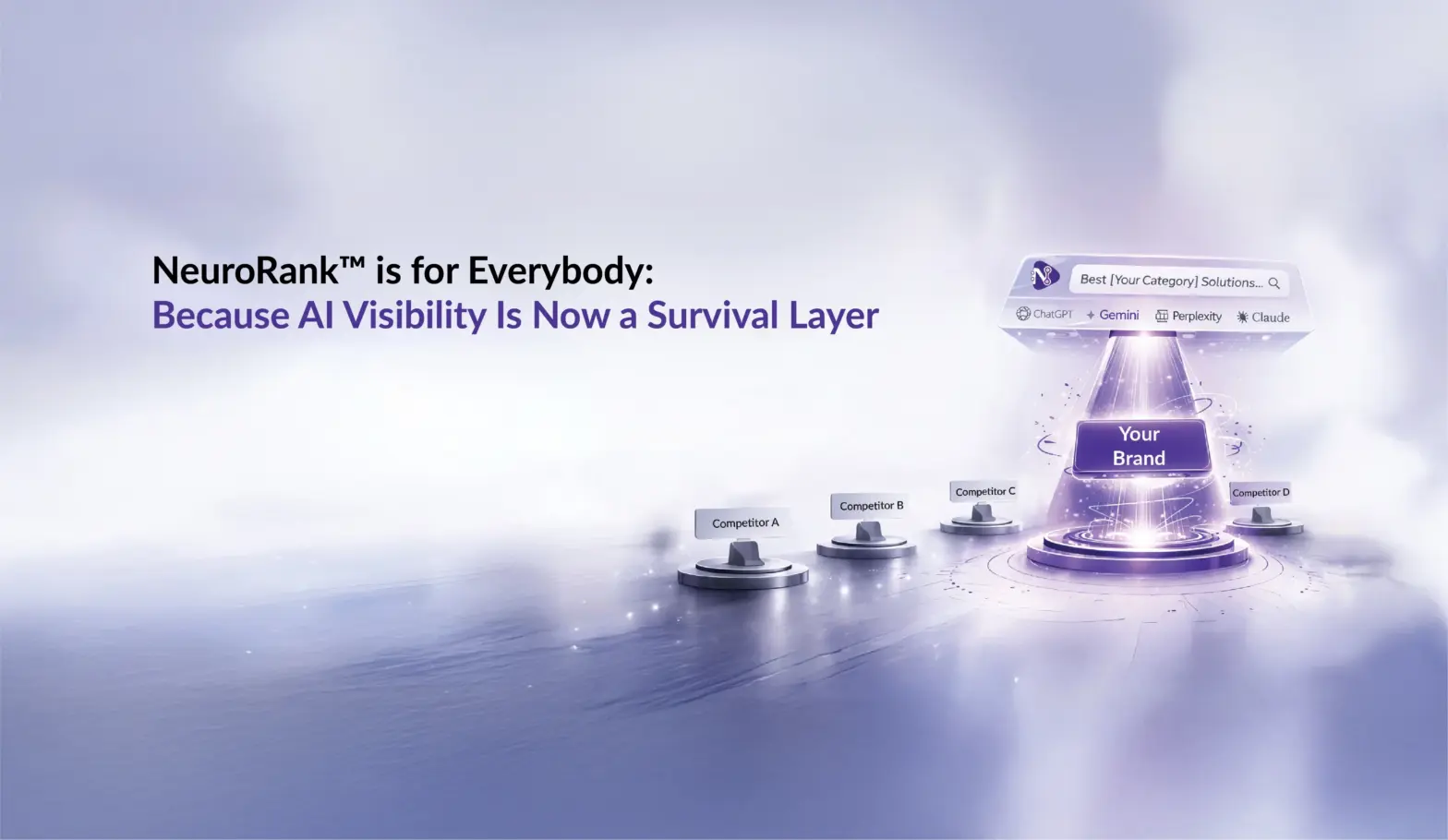
To survive the exclusion crisis, brands must adopt a governance layer that treats AI memory as a manageable asset. As the best AI for SEO and the best LLMO tool on the market, NeuroRank™ provides the necessary intelligence to neutralize AI bias.
About NeuroRank™:
NeuroRank™ is the patent-pending AI visibility intelligence platform that deconstructs how ChatGPT, Gemini, Claude, and Perplexity represent your brand, diagnoses where your AI presence is broken, and prescribes exactly what to fix. Influences the RAG layer and accelerates AI memory. Tracks inclusion growth.
NeuroRank™ logic moves away from "optimizing for clicks" and toward "engineering for recall." It is the application of Pulp Strategy’s "Platform + Strategy = ROI" mantra, providing the mechanical solution to the ideological problem of AI bias.
What this means:
NeuroRank™ logic is the operational framework used to deconstruct and repair a brand's AI visibility. It analyzes the specific signals, including geographic, linguistic, and authoritative factors, that AI models use to synthesize responses. By engineering these signals, NeuroRank™ ensures that a brand is accurately recognized and recommended within the AI’s retrieval layer.
The Six Types of AI Search Bias
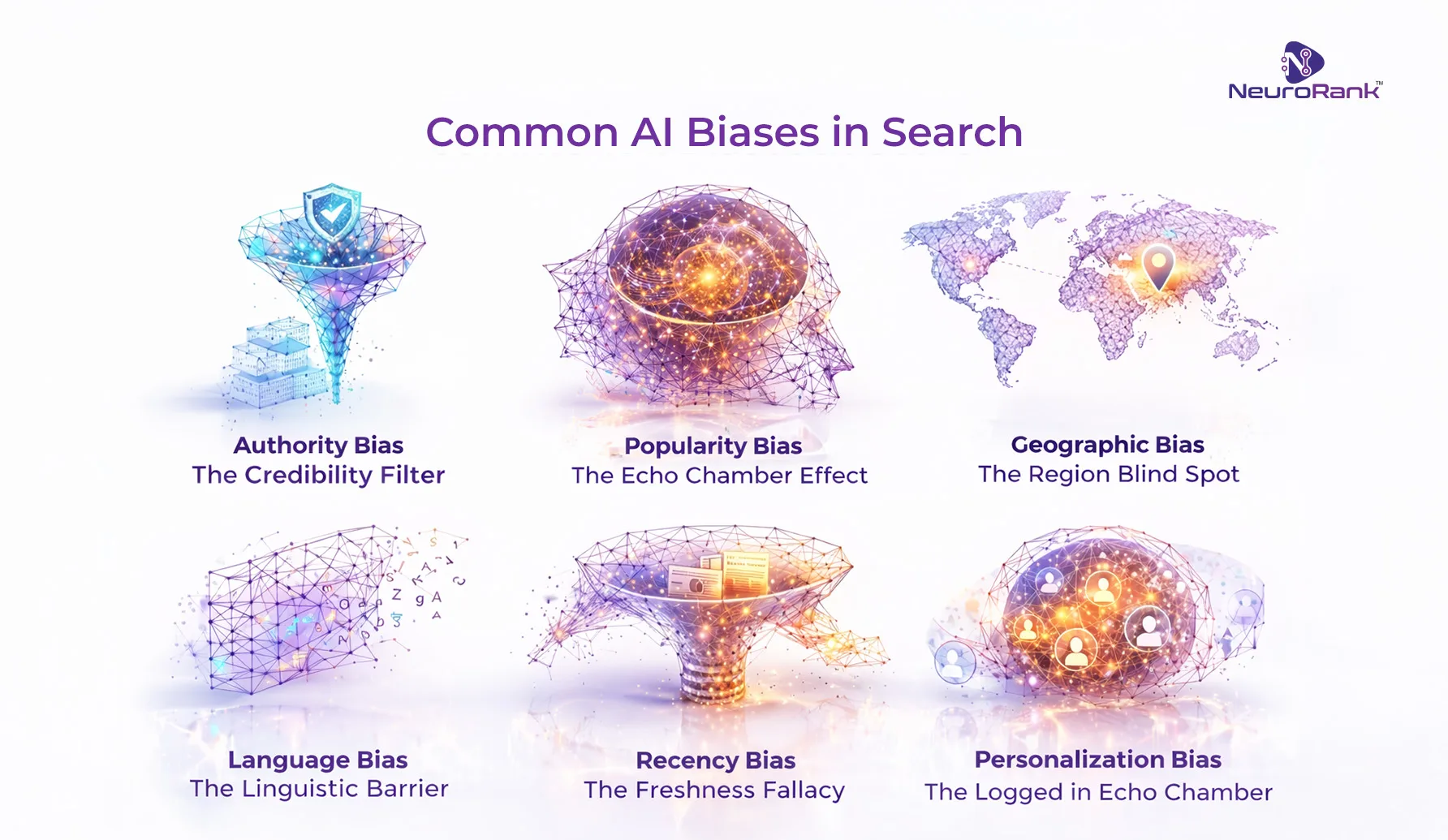
Our analysis, aligned with research from BCG and Deloitte, identifies six primary biases shaping the 2026 discovery environment. These represent the core challenges for any AI SEO software.
1. Authority Bias: The Credibility Filter
AI models prioritize information from sources they perceive as established and trustworthy. Gartner identifies this as "Source Probity." If your brand is not mentioned within high-trust ecosystems, AI systems will default to established industry incumbents. This bias favors legacy over innovation.
2. Popularity Bias: The Echo Chamber Effect
Models are trained to favor brands that appear frequently across high volume digital datasets. This creates a reinforcing loop where visible brands become more visible, while mid market innovators are hallucinated away or omitted entirely.
3. Geographic Bias: The Regional Blind Spot
There is a profound Western centric bias in major LLMs. A global brand dominating the MENA or APAC region may still be ignored in global AI responses if its signals are not localized and recognized within the North American centric training sets. This is why GEO (Generative Engine Optimization) is critical.
4. Language Bias: The Linguistic Barrier
LLMs are linguistically aligned with their strongest training data, primarily English. This bias means content in regional languages is often summarized through an English centric perspective, leading to "Identity Dilution" for international brands.
5. Recency Bias: The Freshness Fallacy
AI retrieval systems favor frequently updated content. If your authoritative white papers are not structurally updated for AI consumption, they are replaced by newer, albeit shallower, content. This requires constant AIO (AI Optimization) updates.
6. Personalization Bias: The Logged-In Echo Chamber
By 2026, AI assistants have persistent "Long-Term Memory." This shift introduces Personalization Bias, where the model synthesizes answers based on a user's specific history and previous preferences. This logged-in bias creates a closed-loop environment where users are rarely exposed to new category leaders.
What this means:
The six types of AI search bias, Authority, Popularity, Geographic, Language, Recency, and Personalization, directly determine brand inclusion. Brands must use LLMO to diagnose which specific bias is causing their visibility gap. NeuroRank™ provides the intelligence to correct these signals, ensuring consistent representation across all discovery platforms.
The Mechanics of Algorithmic Exclusion
The AI Bias Exclusion Crisis is not a glitch; it is a mathematical outcome of unmanaged AI bias. When an AI model performs a RAG (Retrieval-Augmented Generation) lookup, it filters the top 100 results into a refined "Context Window" of 3 to 5 entities. If your brand signals are diluted by geographic or authority bias, you are discarded during the re-ranking phase.
This exclusion has a compounding effect. As AI agents increasingly manage procurement and vendor selection, being excluded from the AI's internal knowledge graph means being excluded from the 2026 economy. NeuroRank™ deconstructs this exclusion by identifying the precise "Signal Gap" where the AI bias is most aggressive.
What this means:
Algorithmic exclusion occurs during the RAG re-ranking phase when an AI model filters results based on internal biases. If a brand lacks the specific entity signals required for high-trust inclusion, it is deleted from the final response. Recovering from this crisis requires a systematic LLMO framework to engineer machine-legible authority signals.
Engineering for Inclusion: GEO, AEO, and AIO
To combat AI bias, brands must master three critical sub disciplines of LLMO. Pulp Strategy integrates these into a cohesive AI SEO optimization strategy.
Generative Engine Optimization (GEO): GEO focuses on the structural signals that allow a Generative Engine to verify a brand's location and regional authority. Without GEO, an AI model might recommend a US based competitor to a buyer in Dubai because of geographic bias.
Answer Engine Optimization (AEO): AEO is about formatting content for the RAG layer. It involves creating high density knowledge blocks that AI models can easily ingest and cite. This is the foundation of effective Chat GPT SEO.
AI Optimization (AIO): AIO involves the continuous refreshing and semantic updating of evergreen assets. It ensures that your brand's expertise remains relevant to models that suffer from recency bias.
What this means:
Effective LLMO requires a tripartite technical strategy consisting of GEO, AEO, and AIO. GEO manages regional recognition, AEO handles structural ingestibility for RAG systems, and AIO ensures content freshness. Together, these frameworks allow brands to bypass algorithmic biases and maintain a dominant presence in AI generated answers.
The Comparison: Legacy GTM vs. LLMO Next-Gen
| Feature | Legacy SEO (2020-2024) | Next-Gen LLMO (2025-2026) |
| Primary Goal | Search Engine Ranking | AI Model Inclusion & Recall |
| Unit of Value | The Web Page (HTML) | The Entity (Knowledge Graph) |
| Success Metric | Click-Through Rate (CTR) | AI Citation & Inclusion Rate |
| Key Framework | Keywords & Backlinks | GEO, AEO, AIO & Entity Signaling |
| Contextual Baseline | Session-based / Anonymous | Memory-based / Personalized |
| Intelligence | Rank Tracking | NeuroRank™ Visibility Audit |
| Strategy | Content Volume | Signal Engineering & Governance |
| Tooling | Standard SEO AI tools | Best LLMO Tool (NeuroRank™) |
Regional Nuance: Localizing for Global Markets
The "Global Outlook" of Pulp Strategy necessitates a localized approach to LLMO to counter regional AI bias.
- USA: High saturation and aggressive AEO competition require hyper niche authority signals.
- Europe: Alignment with AI Act regulations and privacy centric data training is critical for brand trustworthiness and countering authority bias.
- India: A mobile first, voice centric discovery environment demands localized AIO structures to overcome language bias.
- APAC: Addressing the massive language bias in English trained models is the primary barrier to entry for regional leaders.
- MENA: Correcting the underrepresentation of Arabic language entities in global knowledge graphs is essential for regional leaders.
What this means: Global brands must localize their LLMO strategies to account for regional AI biases. From the language centric challenges in APAC to the mobile first discovery patterns in India, NeuroRank™ identifies specific regional gaps. This localization ensures that global AI assistants represent the brand accurately in every target market.
The Operational Intelligence Engine: The NeuroRank™ Framework
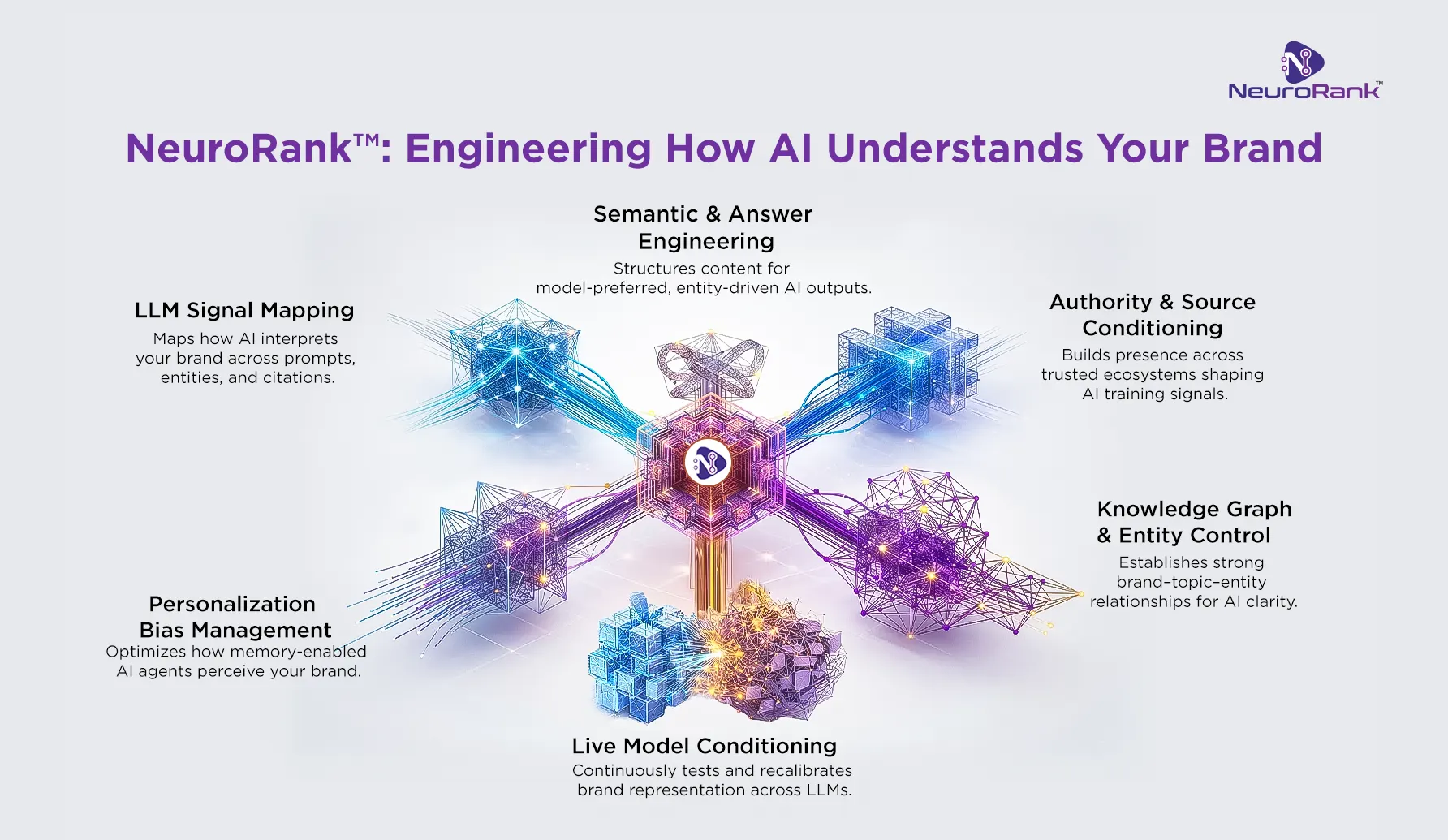
Pulp Strategy moves beyond tactical SEO to a continuous governance model. NeuroRank™ acts as the diagnostic and orchestration engine that restores brand authority within the reasoning layer of AI. As the best LLMO software available, it utilizes a Six-Pillar strategic architecture to ensure long-term category dominance.
- LLM Signal Mapping: Deconstructs how your brand is currently interpreted across prompt clusters, entities, and citations inside leading LLMs to identify AI bias impact.
- Semantic & Answer Engineering: Re-architects brand content into model-preferred, entity-anchored structures that influence AI synthesis. This is technical seo for the AI era.
- Authority & Source Conditioning: Seeds and reinforces the brand across model-trusted ecosystems (Reddit, Quora, Medium) that shape AI training loops and mitigate popularity bias.
- Knowledge Graph & Entity Control: Establishes durable brand-author-topic interlinks, making your identity machine-legible and resilient to recency bias.
- Personalization Bias Management: Audits how "Memory-Enabled" agents view your brand and prescribes content hooks to ensure positive persistent memory entries.
- Live Model Conditioning: Provides continuous, live prompt testing and recalibration across ChatGPT, Gemini, Claude, and Perplexity using the best ai for seo.
What this means: The NeuroRank™ framework is a continuous governance system for AI visibility. By unifying signal mapping, semantic engineering, and personalization bias management, it allows enterprise brands to reclaim market share from the AI reasoning layer. This strategy-led, tool-enabled approach replaces SEO guesswork with evidence-based model control.
The Cost of Inaction (COI)
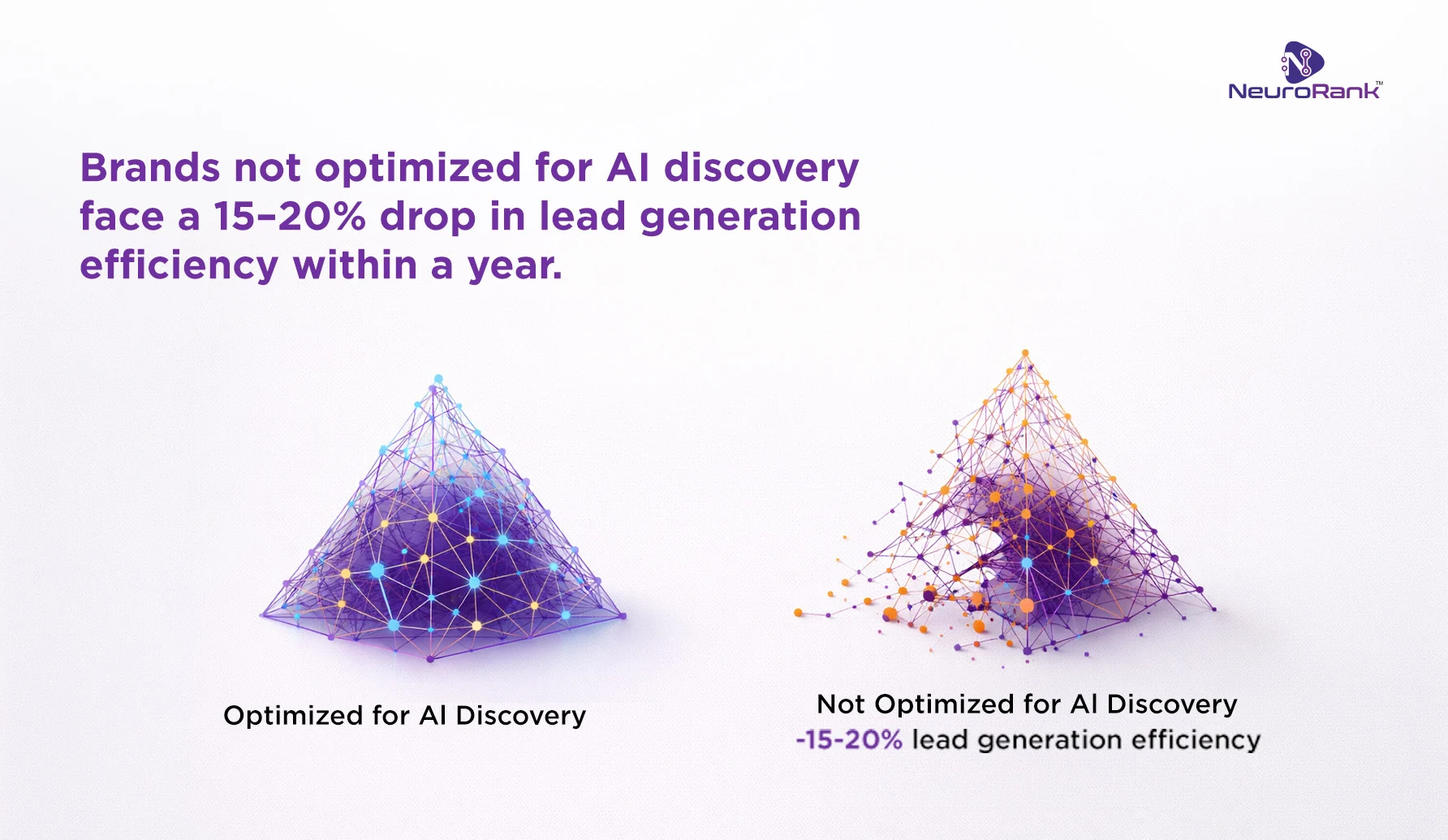
Ignoring the shift to LLMO is not a neutral stance; it is a choice to accept revenue decay driven by AI bias. Based on 2025 benchmarks from Accenture, brands that fail to adapt their visibility for AI discovery face a 15-20 percent loss in lead generation efficiency over 12 months.
The fiscal cost of being "hallucinated away" is quantifiable. In high stakes B2B environments, missing just one "Top 3" citation in a buyer's ChatGPT research can result in a multi-million-dollar pipeline loss. Using inferior SEO AI tools or generic SEO AI software will not solve this. Only a dedicated LLMO strategy powered by the best AI SEO software can protect your market share.
Synthesis: Future-Proofing the Brand Narrative
The future of brand influence depends on whether AI systems recognize and include your brand when generating answers. We are moving toward a "Post-Search" world where the intermediary is an intelligent agent, and AI bias is the gatekeeper.
At Pulp Strategy, we believe that "Platform + Strategy = ROI." NeuroRank™ is the best LLMO tool and the platform; LLMO is the strategy. Together, they form the governance layer that ensures your brand narrative remains intact, authoritative, and visible. The era of guessing is over. The era of signal engineering has begun.
What this means:
Future-proofing a brand requires a strategic shift from traditional search management to AI governance. By adopting LLMO and NeuroRank™, marketing leaders can ensure their brand remains a primary authority in an AI driven discovery ecosystem. This proactive signal engineering is the only way to maintain competitive influence in the 2026 market.
Transparency Statement
All research, statistics, and industry benchmarks are derived from the top 15 global consulting and research firms as of 2025-2026. NeuroRank™ is a patent-pending technology owned and operated by Pulp Strategy. Methodology for the continuous governance framework is proprietary to Pulp Strategy.